
Just like the most committed New Year’s resolutioner, the US healthcare system goes through a reset every January. Insurance benefits restart, prior authorizations must be reapproved, and coverage details shift overnight.
For patient access teams, it triggers a sudden surge of work that many insiders refer to as “Blizzard Season.” (You may know it better as annual reverification, or even “AR.”)
From call volume to hold times, the operational burden is impossible to ignore, and new data from our team reveals just how dramatic the spike has become.
Here are five stats from Infinitus’ Blizzard Season that capture the magnitude of January’s access surge.
Task volume increased 69% over 2025
In January 2026, Infinitus AI agents took on a 69% increase in total tasks over the same period the year prior, reflecting how many more access programs are becoming AI enabled – but also demonstrating just how much of the healthcare system still runs through payor phone lines. You can think of a task in this case as one benefit verified for one patient, but know that some patients require multiple verifications because of multiple prescriptions.
Still, with task totals in the hundreds of thousands, an increase of this magnitude can quickly overwhelm teams that rely on manual processes, leading to extended turnaround times and delaying patients’ access to treatment. It’s one of the clearest indicators of why January has become such a high-pressure period for healthcare operations.
We often tout that our AI agents surpass human benchmarks when completing certain tasks, but more importantly, our AI agents take on things that people simply shouldn’t have to waste time doing. And waiting around on hold to speak to a payor agent is definitely one of those things.
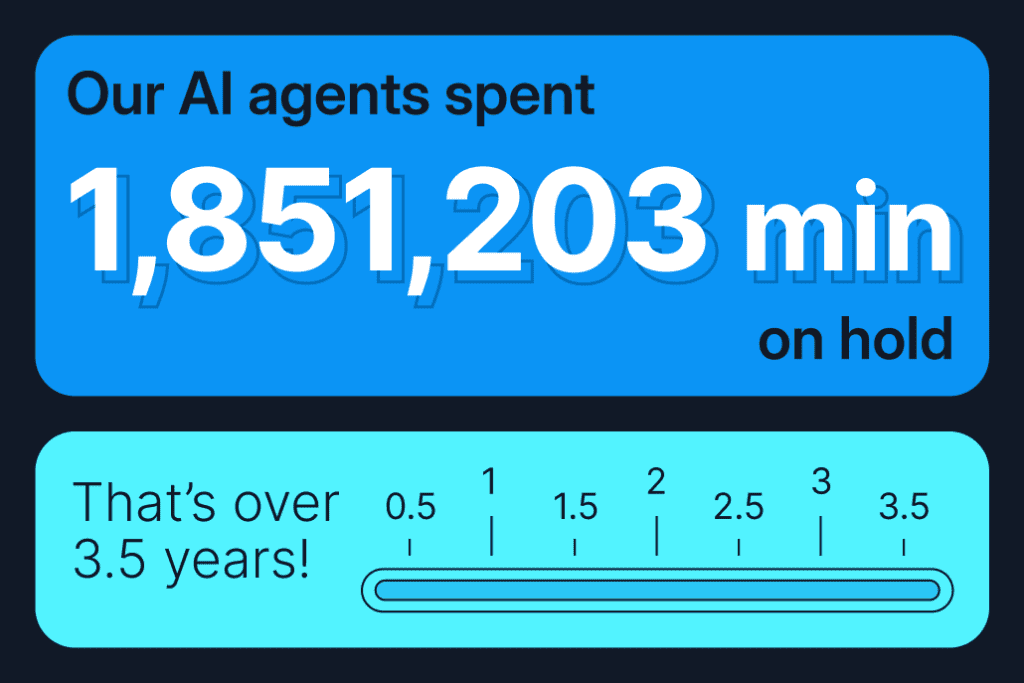
This January, our AI agents spent an average of 19% more time on hold compared to January 2025, meaning they endured about 620,000 more minutes listening to Opus Number One than in 2025. Calls that were placed on hold were left there an average of 8.5 minutes each time, a tally which adds up quickly. In fact, the total amount of time our AI agents spent on hold this January is enough time to:
? Travel to the Moon and back 145 times
? Listen to “Bohemian Rhapsody” 312,895 times, or
? Make 3,856 loaves of sourdough bread in your home kitchen from scratch
Without AI agents handling this burden, healthcare workers would have had to take it on. And we should note: Because Infinitus has dedicated call-in lines at some payors, it’s likely human workers would have spent even more time on hold than our agents did this year.
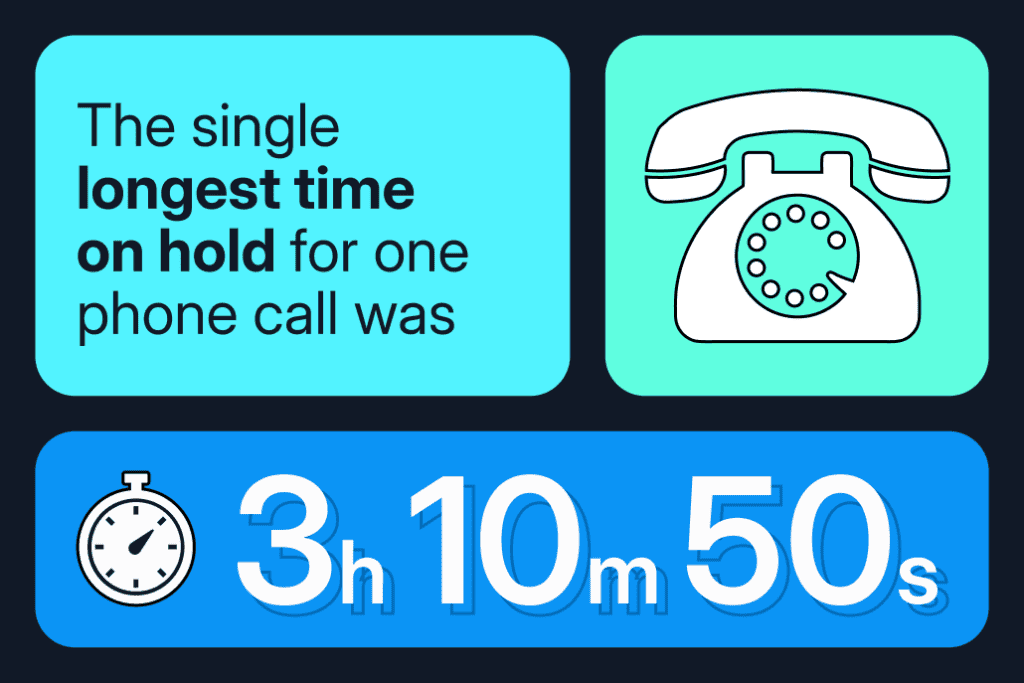
And the payor with whom our agent waited that long also had four of the top-10 longest hold times we experienced in all of January. For our AI copilot FastTrack, the longest hold time we experienced was 2 hours, 7 minutes, and 23 seconds.
Interestingly, pharmacy benefit manager (PBM) benefit verification calls experienced hold times less frequently than major medical benefit verification calls – but when they did include hold times, those waits were significantly longer. Average hold times for PBMs increased by 2.5X year over year, indicating a possible payor-side capacity problem this year.
While the vast majority of calls – PBM, major medical, and otherwise – have more reasonable hold times, calls with hold times over an hour doubled from 2025 to 2026. And beyond that, about 1% of our calls that were placed on hold were left there for 117 minutes (nearly two hours) or more.
Our agents spent an average of 2.78 minutes navigating IVR on each call
That might not seem like much, but time spent navigating interactive voice response (IVR) systems adds up quickly. Let’s say you’re making 10 of these calls a day. That’s nearly half an hour of having to “press 1 for English”
The added bonus of having Infinitus AI agents navigate IVR is that our agents actually put it to good use. When possible, they extract and collect data directly from the IVR – and we tripled the volume of data we extracted this year vs. 2025.
We’re getting closer to not needing phone calls at all
OK – it’s true that this headline isn’t a stat. But there is a stat that backs it up: Infinitus completed significantly more tasks for our customers this year completely digitally. In fact, our digital task completion surged more than 5X compared to 2025’s reverification season. And this year, for the first time, we were able to complete some prior authorization follow-ups tasks digitally too.
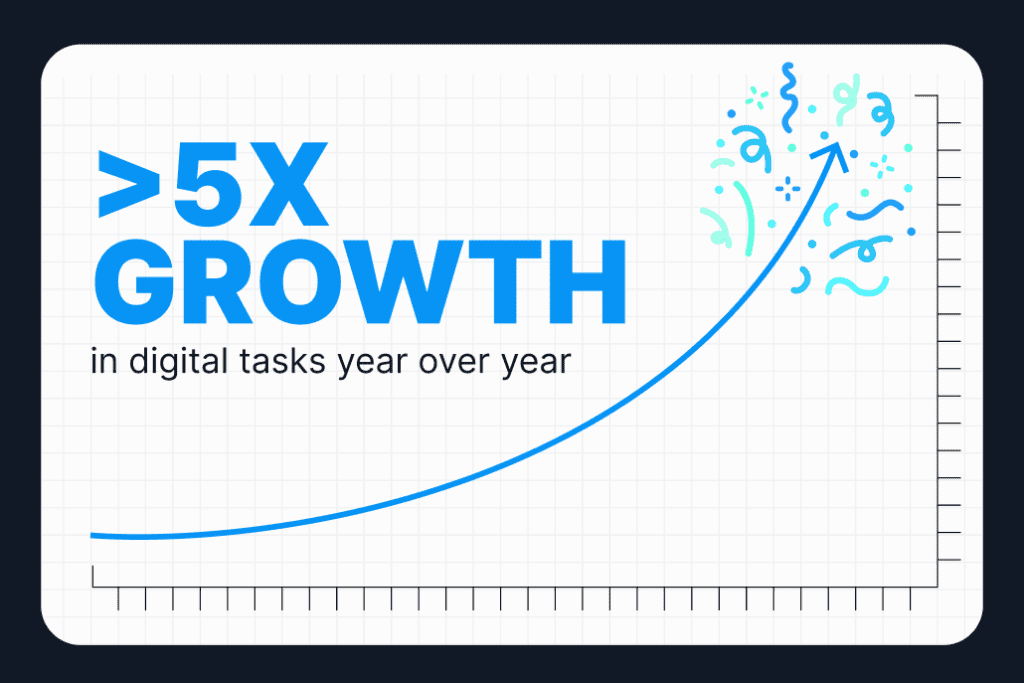
This is significant, because every digital task completed is one less phone call made by a provider and received by a payor agent. And it signals what we believe is a shift away from the phone-dependent processes that have long slowed patient access and strained healthcare operations each January.
But the truth is, January 2027 will still bring another blizzard of benefit resets and access challenges, whether teams are ready for them or not. And so, we’d love to help you weather next year’s reverification storm – and would be happy to show you how.
Reach out to us today to learn more about how we’re helping patient access programs at eight of the 10 largest pharmaceutical companies get their patients on therapy faster.