
Generative AI is a buzzword, promising faster documentation, smarter summaries, and more natural conversations. But as healthcare organizations move from experimentation to real-world deployment, confusion remains about generative AI and agentic AI, and when each makes sense to use in healthcare.
In fact, Infinitus CEO and Co-founder Ankit Jain is frequently asked by healthcare leaders what they need to know about each, and where the key differences lie. Below, he unpacks some of the most common sources of confusion, as well as where the real distinction shows up in healthcare workflows, and how to think about which approach drives which outcomes.
Everyone is talking about generative AI in healthcare. When people use that term, what do they usually mean?
When most people in healthcare say “generative AI,” they’re usually referring to systems built on large language models. These are tools that generate clinical or administrative text – things like summarizing documents, drafting responses, rewriting information, or answering questions conversationally. At its core, generative AI is about producing language. Sometimes, there is some confusion about generative AI and what it can do, versus agentic AI, which we speak a lot about at Infinitus.
So then let’s compare generative and agentic AI in healthcare. What do we mean by agentic AI at Infinitus, and how is it fundamentally different?
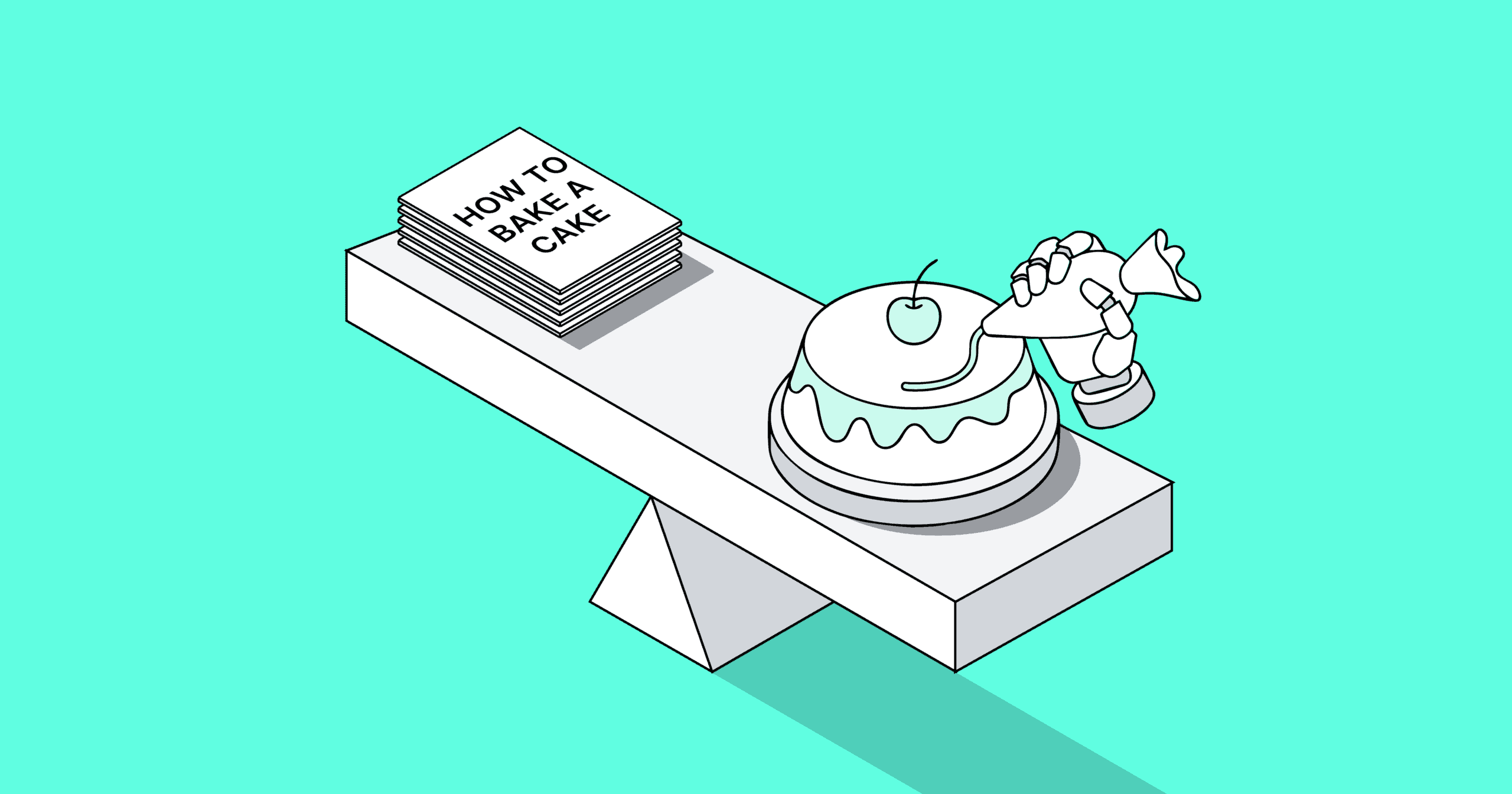
The key difference is that generative AI generates language or text, while agentic AI doesn’t just generate something, it takes action. Agentic AI decides what to do, navigates a workflow, and completes tasks autonomously. That’s the big difference.
It’s a system of action instead of a system of just generation. For example, a generative system might draft a prior authorization letter. An agentic system goes further: it completes the prior authorization call, submits the request, logs the reference number, and updates the system of record. Instead of delivering language, it delivers outcomes.
If you’re a healthcare leader trying to buy AI, how do you know whether you should be shopping for generative AI, agentic AI, both, or something else?
It really depends on your goals.
If your goals are to build and own the technology to drive outcomes, then you want the building blocks, and those building blocks are generative AI pieces. You want to buy access to a large language model.
But if you’re looking for a full solution that drives outcomes, you probably want something agentic. That means you provide the input or trigger, and the system handles the decision-making, execution, and completion of the workflow end to end.
Can you give examples of things agentic AI can do in real healthcare workflows that generative AI alone cannot?
Many healthcare workflows aren’t perfectly linear or even well defined. Take a health risk assessment. You may need to ask 25 questions and collect 25 answers. A generative system can ask the questions and transcribe responses.
An agentic system goes further. It validates responses in real time against a knowledge base, checks for internal consistency with prior answers, and flags discrepancies. If a member previously reported no issues around access to food and now reports food insecurity, for example, the system can probe whether something has changed materially. It resolves these gaps during the interaction instead of requiring human follow-up later. That end-to-end outcome is something a purely generative system wouldn’t be able to do.
A question you’re often asked is: “Why can’t I just wrap ChatGPT or another LLM and use it to run patient calls or coverage checks?” What’s the honest answer?
I often hear variations of, “Why can’t I just take a large language model like a Claude or a GPT or a Gemini and wrap it with a prompt and deploy it? Why do I need to use a solution like the one offered by Infinitus?” And the reality is that the jump from building a demo to going into a scaled deployment is very large. Having the right clinical evaluations, having the right safety guardrails, and being able to be compliant are the biggest reasons why large enterprises partner with Infinitus.
We’ve tested clinically tuned prompts on the best LLMs in the world and compared them to our agent response control system. The difference matters. Our system is able to operate at 100% compliance, while even the best standalone models land closer to 96%. That 4% gap is the difference between compliant and non-compliant. In healthcare, there’s no gray area.
If I’m running a call center for a pharma company or a payor, what questions should I ask vendors to make sure I’m actually getting agentic AI?
There are a few critical things to evaluate: First, the customer experience. Does the system feel cohesive, or like disconnected pieces stitched together? How natural are the handoffs and escalation points?
Second, is the experience incrementally better or significantly better? If it’s only incremental, callers will treat it like legacy IVR systems – pressing zero or yelling “agent!” over and over again. A noticeably better experience gives you a real chance at containment.
Third, how does the system handle human escalation? If someone asks for a person, we believe that should always be enabled. That moment is about trust, and vendors differ philosophically on this.
Finally, look at integration and ownership. How deeply does the system integrate with your telephony, your data, even your phone numbers? If you stop using a vendor in the future, the experience should remain seamless for callers. I say it over and over: Demos are easy; production reality is what matters.
What’s the biggest mistake organizations make when trying to AI-enable patient engagement?
They overwhelm people. Organizations assume more touchpoints equals more engagement, but as consumers, we all feel the opposite. We’re already overloaded with calls, texts, and notifications.
The solution isn’t more agents. The solution is smarter agents. Instead of deploying separate AI agents for benefits, scheduling, and assessments that can’t talk to each other, you need agents that work together and can handle multiple needs in a single interaction. That’s why choosing a partner that can span administrative and clinical, inbound and outbound, is so important.
How is agentic AI being used across healthcare today?
If you’d like to learn how agentic AI is being used in production across healthcare today, we invite you to see how a Medicare Advantage plan is redirecting hundreds of thousands of dollars into direct patient care, or how a top-10 pharmaceutical manufacturer is shaping the future of patient access.
If you’re ready to see what’s possible at your organization, let’s talk. Infinitus works with eight of the 10 largest pharma manufacturers and supports 44% of the Fortune 50 in creating a single connected experience across the entire patient journey.